Otium Word - Relax Puzzle Game
- 4.8
- Rating
- 100.00K
- Installs
- Free
- Price
 Analysis by App-foxy
Otium Word is a free word game from Solitaire Relax® - Solitaire Card Games, and I found its main appeal in the way it turns familiar word-linking into a quiet, repeatable puzzle routine. Rather than asking me to commit to a long session, it works best as a small mental reset: I can open it, look for connections, and stop when I feel ready. That simple rhythm is the capability worth focusing on, because it changes the game from a quick test of vocabulary into something that can fit naturally around everyday interruptions.
The game sits in the word-puzzle category, with a store summary that presents it as a classic word-connect experience with its own visual design. In my use, the important distinction is not whether the basic idea feels completely unfamiliar; it is how comfortably the familiar idea can be played in short bursts. I would recommend it to someone who enjoys arranging letters into words but does not want the pressure of a competitive timer or the commitment of a large adventure game.
The strongest reason to try Otium Word is its low-friction word-search loop. It gives a player a direct task, lets attention settle on the available letters, and makes progress feel more immediate than a traditional crossword. That makes it especially suitable for a coffee break, a commute with a few spare minutes, or the quiet part of an evening when I want something interactive without a complicated story to follow.
You May Also Like

 Blood Strike: 2.5 Anniversary
Blood Strike’s Loadouts Turn Every Drop Into a Tactical Gamble
A close look at Blood Strike’s custom loadouts: how fast access to signature weapons reshapes its battle royale rhythm, rewards preparation, and narrows the gap between fights.

 Pandora - Music & Podcasts
Pandora’s Music Is Easy to Start, but Harder to Recover
Pandora’s strength is its low-effort path from a seed to a station. Its weak spot is how much confidence it asks you to place in connection, setup, and quiet recovery.

 8 Ball Pool
 Is Built on Rivalries, Rematches, and Routine
A close look at the rivalries, rematches, shared routines, and unanswered safety questions that turn a quick pool match into a persistent mobile community.

 Samsung Music
’s Quiet Strength Is Playing What You Already Own
Its reach comes less from spectacle than from dependable access to a personal library. That simplicity is both the app’s strongest retention engine and its ceiling.

 AccuWeather: Weather Radar
AccuWeather Review: A Quick, Clear Forecast for Everyday Decisions
For everyday plans, the best forecast is the one you can understand quickly. AccuWeather makes rain timing, radar, and local conditions easy to act on, with a few trade-offs.

 Hill Climb Racing
Why Hill Climb Racing Still Turns Crashes Into One More Run
A tiny car, a bumpy hill and one more upgrade: Hill Climb Racing keeps resurfacing because its simple chaos makes every near-miss feel personal.
More From Our News Desk



How the word-connecting idea feels in practice
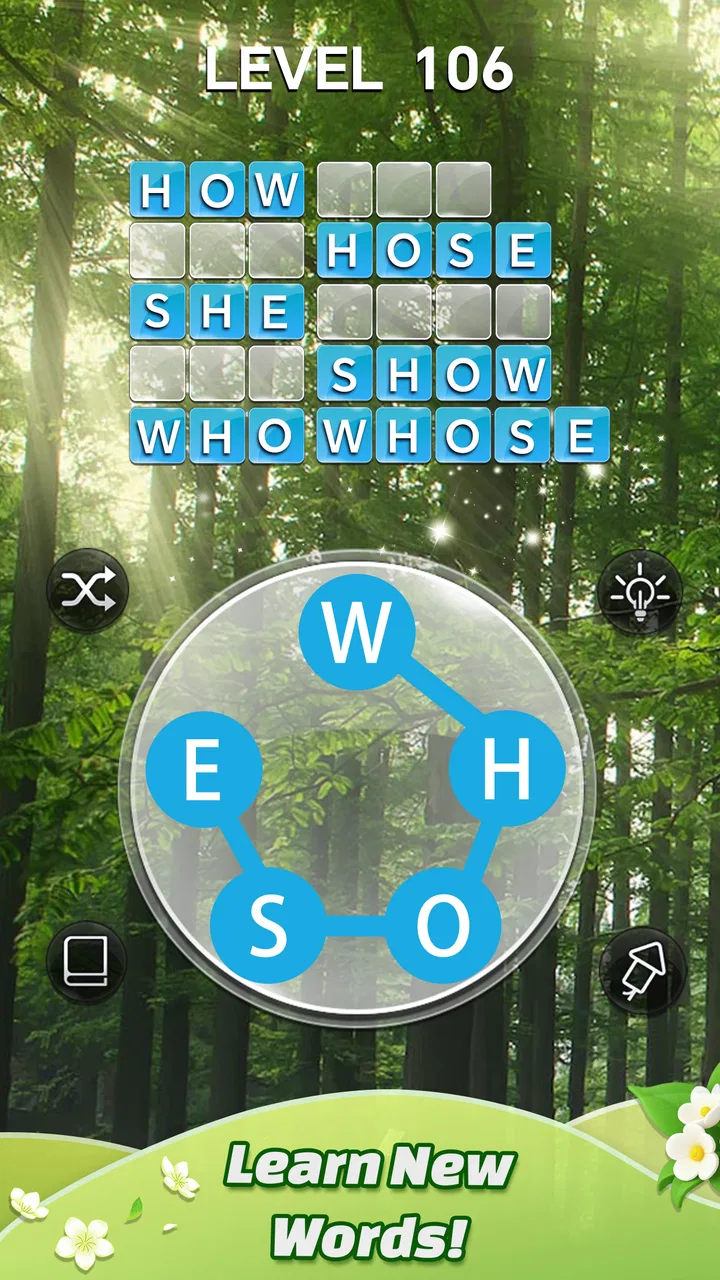
The central activity is easy to understand: I look at the letters presented by the puzzle and connect them into words. That accessibility matters. I do not need to learn a character system, remember a plot, or master a collection of special controls before I can begin. The first few moments are spent solving rather than configuring, which is exactly what I want from a casual word game.
What makes this format useful is the balance between recognition and discovery. Some words appear quickly because the letters suggest them naturally. Others require me to stop treating the board as a single obvious answer and instead test shorter combinations, alternate starting points, or a different way of reading the available letters. The result is a gentle shift from instant guessing to deliberate observation.
I also like that this structure gives me a natural stopping point. In many mobile games, leaving halfway through a round feels like abandoning something unfinished. A word puzzle is different: once I have reached a point where my attention is fading, I can put the phone down without feeling that I have lost the thread of a complicated system. That makes the game easier to fit into real life than more demanding puzzle formats.
For a better experience, I would avoid treating every board as a race. My most useful approach is to scan for familiar word shapes first, then look again at the remaining letters instead of repeatedly forcing the same guess. If I get stuck, I mentally separate obvious short words from less obvious combinations. This small change prevents the common mistake of staring at the entire puzzle as one intimidating block.
Another practical habit is to play with a clear purpose. If I want relaxation, I solve slowly and accept that a puzzle may take a little thought. If I want mental stimulation, I try to find less immediate connections before moving on. The same basic game can therefore feel different depending on whether I use it as a break, a concentration exercise, or a way to pass time.
A realistic everyday session
Imagine waiting for an appointment while the room is quiet but the wait is too short for a film or a long article. This is where Otium Word makes sense. I can open it, solve a few word connections, and stop as soon as my name is called. There is no need to remember a complicated control scheme, and the activity gives my attention somewhere useful to go without demanding complete immersion.
The same applies to a short pause between household tasks. I might play while waiting for water to boil or after finishing a message, but I would not describe it as a replacement for a full-length game session. Its value is precisely that it can occupy small spaces in the day. People who prefer games with deep progression, exploration, or a strong social layer will probably find this limited, while people who enjoy compact mental challenges may appreciate the restraint.
It is also a reasonable choice for players who want a word activity that feels less formal than a newspaper puzzle. A crossword can reward broad knowledge and careful clue interpretation, while a word-connect game focuses more directly on spotting combinations among the letters in front of me. Neither approach is automatically better. Otium Word is the more approachable option when I want immediate interaction rather than a detailed clue-solving session.
Where it differs from familiar alternatives
Compared with a standard crossword, the game reduces the amount of reading required before solving begins. I am not interpreting a long clue or working across a grid with several intersecting answers. That makes the experience faster to enter, but it also means I miss the richer sense of deduction that a well-made crossword can provide.
Compared with competitive word games, the appeal is calmer. A competitive alternative may be better if I want rankings, direct pressure, or the satisfaction of beating another player. Otium Word is better suited to solitary play, especially when I want to concentrate without feeling watched or hurried. The trade-off is clear: less tension, but also less social energy.
Compared with large puzzle adventures, it is much more focused. There is no need to learn a broad world or manage several systems before the word challenge becomes enjoyable. That focus is a strength for casual players, although anyone looking for narrative rewards or a long-term strategic layer should choose a different kind of game.
What the game is best at
Its best quality is the way the core task stays understandable while still leaving room for hesitation. I can solve a straightforward combination immediately, then spend longer considering what the remaining letters might form. That creates a useful middle ground between a completely effortless time-filler and a puzzle that demands sustained concentration.
The design also supports a particular kind of mental reset. When I have been switching between messages, work, and notifications, searching for words gives me one narrow problem to focus on. It is not a substitute for rest, and I would not claim that a few rounds transform concentration, but the act of limiting attention to letters can feel cleaner than scrolling through unrelated content.
For that reason, I think the game works best when notifications and other distractions are not competing for attention. The puzzle itself is simple enough to enter, but the benefit of its focused loop is reduced if I keep jumping away from it. A short, intentional session is more satisfying than opening it automatically and barely noticing what I am doing.
Trade-offs worth knowing before downloading
The easy entry point can also be a limitation. Players who need a complex system, dramatic escalation, or a constantly changing objective may find the word-linking format repetitive over time. I would not choose this as my only mobile game if I wanted action, narrative development, or a strong sense of exploration. Its appeal depends on enjoying the act of finding words itself.
There is also a difference between a game being relaxing and a game being effortless. Some puzzles may feel obvious, while others can slow me down when the remaining possibilities are not immediately visible. That variation is useful because it prevents every round from becoming automatic, but it may frustrate anyone who expects a consistently smooth flow with no moments of uncertainty.
The game is free to download, and optional in-app purchases range from $0.49 to $49.99 per item. I would keep that in mind before treating it as a completely cost-free experience. A free starting point is convenient, but players who prefer games with no purchase prompts or optional spending at all may want to be cautious about how they use the app.
Its age rating is Everyone, which matches the straightforward nature of a word puzzle and makes it an approachable choice for a broad audience. Still, an Everyone rating should not be confused with a guarantee that every player will enjoy the same pace. Younger players may like the direct word activity, while adults may prefer it as a quiet break; the right fit depends more on tolerance for repetition than on age.
Device compatibility is another practical consideration. The current version is 1.1.4 and requires Android 6.0 or later. That covers many older Android phones, but anyone using an especially old device should check the operating-system requirement before trying to install it. I would also keep the app updated when possible, since the current version is the one intended for the present experience.
The developer is listed as Solitaire Relax® - Solitaire Card Games. That name places the game alongside a developer identity associated with casual entertainment, which helps explain the accessible, pick-up-and-play direction. I would still judge this particular title on whether its word loop suits me rather than assuming that a familiar developer style automatically means it will match my preferences.
Who gets the most from it
I think Otium Word is a strong match for people who enjoy word games but want a softer commitment than a competitive match. It is also useful for anyone who likes to keep a small puzzle available for waiting rooms, short breaks, or quiet evenings. If I were recommending it to a friend, I would describe it as a compact word exercise with a relaxed pace rather than as a deep, all-purpose gaming experience.
It may also suit players who are returning to mobile games after a long break. The controls and objective are easy to grasp, so there is little learning overhead. That makes it less intimidating than a game that begins with a tutorial full of systems, currencies, character abilities, and menus. The directness is valuable when I want to play immediately instead of studying how to play.
On the other hand, I would steer away from it if my main goal were multiplayer competition, elaborate progression, or a rich narrative. A crossword-focused app may be a better choice if I enjoy clues and grid logic. A competitive word title may be better if I need a rival or a score to chase. A larger puzzle game may be better if I want every session to introduce a new mechanic.
The rating and audience response suggest that the game has found a receptive group: it holds a 5.0 average from around 733 ratings, with over 100K installs. Those figures make it easier for me to take the title seriously as an established casual option rather than an unknown experiment, but they do not remove the central question of personal fit. A high average cannot make a repetitive format enjoyable for someone who dislikes word searching.
My practical way of approaching it
I would begin with short sessions instead of trying to judge the entire game in one sitting. The first useful test is whether I enjoy the moment-to-moment search for words, not whether I can imagine a long progression path. If the process of scanning letters feels satisfying after several puzzles, the game is probably aligned with my tastes.
When a puzzle slows me down, I would resist tapping randomly or repeating the same guess. I would look for smaller combinations, change the order in which I inspect the letters, and give my attention a brief reset. This is a small but meaningful technique: the challenge often comes less from lacking vocabulary than from locking onto one unhelpful visual pattern.
I would also decide in advance whether I am playing for relaxation or challenge. For relaxation, I would accept a slower solve and avoid turning every pause into a failure. For challenge, I would set myself a personal goal, such as finding less obvious words before moving on. Creating that distinction helps the same simple format remain purposeful instead of becoming background tapping.
Finally, I would treat the purchase options as optional rather than part of the reason to install. The free entry is enough to decide whether the basic experience works for me. If I do not enjoy the core word-searching action, spending more will not solve that problem; if I do enjoy it, I can make a careful decision about whether any optional purchase is worthwhile.
My final recommendation
After using it as a short-session word game, I see Otium Word as a focused choice for players who want a calm way to connect letters and occupy a few spare minutes. Its most convincing feature is not complexity but accessibility: I can understand the task quickly, concentrate on one small puzzle, and leave without losing the sense of what the game is about.
I would recommend it when the goal is a simple, repeatable mental break rather than a full gaming world. It is free, rated Everyone, and available from a developer known as Solitaire Relax® - Solitaire Card Games, with a current version that supports Android devices running 6.0 or later. The optional purchase range is worth remembering, especially for players who want to keep their mobile entertainment strictly free.
My honest conclusion is that this is a good fit for casual word fans, people who like quiet solo puzzles, and anyone who values a game that can be opened and understood immediately. I would skip it if I needed competition, storytelling, or a deep progression system. For the right player, though, its restrained design is exactly the point: it gives me one clear word challenge at a time and lets that be enough.
FAQs for Otium Word - Relax Puzzle Game
01What is Otium Word - Relax Puzzle Game?
Otium Word - Relax Puzzle Game is a calming and engaging puzzle game designed to stimulate your mind and help you unwind. Players connect letters to form words, solving each puzzle while enjoying serene graphics and soothing sounds. It's perfect for those who love word games and want a relaxing experience.
02Is Otium Word suitable for all ages?
Yes, Otium Word - Relax Puzzle Game is suitable for all ages. The intuitive interface and simple mechanics make it accessible for children, while the increasing difficulty levels offer a challenge for adults. It's a great way for families to enjoy word puzzles together, making it both educational and entertaining.
03Does the game require an internet connection?
Otium Word - Relax Puzzle Game can be played offline, making it ideal for users who want to enjoy the game without worrying about internet connectivity. However, an internet connection may be required for initial downloads and updates to ensure you have the latest features and improvements.
04Are there in-app purchases in Otium Word?
Yes, Otium Word - Relax Puzzle Game offers in-app purchases. While the game is free to download and play, users can purchase hints or additional levels. These purchases are optional and designed to enhance the gaming experience for those who want to progress faster or explore more content.
05What platforms is Otium Word available on?
Otium Word - Relax Puzzle Game is available on both Android and iOS platforms. Users can download the game from the Google Play Store or the Apple App Store, making it accessible to a wide range of mobile device users. Ensure your device meets the minimum system requirements for optimal performance.
Pros
- Engaging puzzles boost cognitive skills.
- Visually calming and aesthetically pleasing.
- Intuitive interface makes navigation easy.
- No intrusive ads interrupt gameplay.
- Regular updates with new puzzle packs.
Cons
- Limited free levels without purchase.
- Requires internet for certain features.
- Occasional bugs in older devices.
- In-app purchases can be pricey.
- Some puzzles are overly simplistic.

Otium Word - Relax Puzzle Game
Gallery